
She grew up on a street in West Quincy where the houses were built from the stone the neighbourhood cut. Her grandfather had worked the Swingle quarry; her father, who had wanted something quieter for her, worked the counter at a hardware store on Copeland Street and kept a jar of broken granite chips on the windowsill above the sink. Priscilla learned the colour grey there — not one grey but forty of them, changing with the rain, some of them nearly blue, some almost gold in late afternoon.
Painting was not the plan. She spent twenty-six years as an operating-room nurse at a hospital across the river, work that taught her two things she still uses daily: how to stay entirely still inside a long, difficult stretch of time, and how to make decisions with her hands before her mind has caught up. She drew in the margins of shift notes. She bought a box of oil paints at forty and left it unopened for a decade because opening it would have meant admitting she wanted something.
In 2009 a friend dragged her to a cold wax workshop in Gloucester. Wax changed everything. Oil paint alone had felt like a language she was translating badly; wax gave her a substance she could build, scrape, bury and excavate — a surface with history in it. She came home, cleared the second bedroom, and painted every morning before her shift for four years. When she retired, she set up her studio in Quincy, MA and has kept the same hours ever since: in by seven, out by two, no music, no phone.

How the paintings are made
Everything begins with a walk. Wollaston Beach at low tide, the Fore River bridge, the granite railway path behind the quarries. She carries no camera and makes no sketches; she looks until she can feel the weather on her arms, then goes to the studio and starts laying wax.
A panel takes anywhere from three weeks to eight months. Oil and cold wax medium go on in thin veils with a palette knife, each layer left to firm before the next. Then the taking away: scraping with a blade, cutting lines with a bookbinder's awl, sanding back to a colour she buried a month ago. Marble dust and Quincy quarry grit go into the lower layers of the stone paintings so the surface has a tooth you can hear when you touch it. The picture is finished when nothing more can be removed without losing the weather.
She works in four series at once, and they argue with each other. Harbor Light is about atmosphere; Granite & Salt is about mass; Interiors is about the space that light leaves behind when it goes; the Small Studies are where she thinks out loud, one morning at a time.
“I am not painting the harbour. I am painting the twenty minutes of standing there, which is a different thing and much harder to hold.”
Exhibitions & the wider room
Her work has hung in group shows at the Quincy Art Association, the Fountain Street Gallery in Boston, and twice at the South Shore Art Center in Cohasset, where Quarry Face No. 2 took the juror's prize in 2021. Her first solo show, Forty Greys, opened at a small gallery on Newbury Street in 2023 and sold eleven of fourteen panels in a week. Two paintings are in the permanent collection of a Boston teaching hospital — hung, at her request, in the corridor outside a surgical waiting room.
She travels to look. Twice a year she books a week somewhere with old stone and grey water and does nothing but walk galleries and coastlines, filling notebooks with words rather than drawings. She teaches one cold wax intensive each spring in the studio, six students, no beginners turned away.
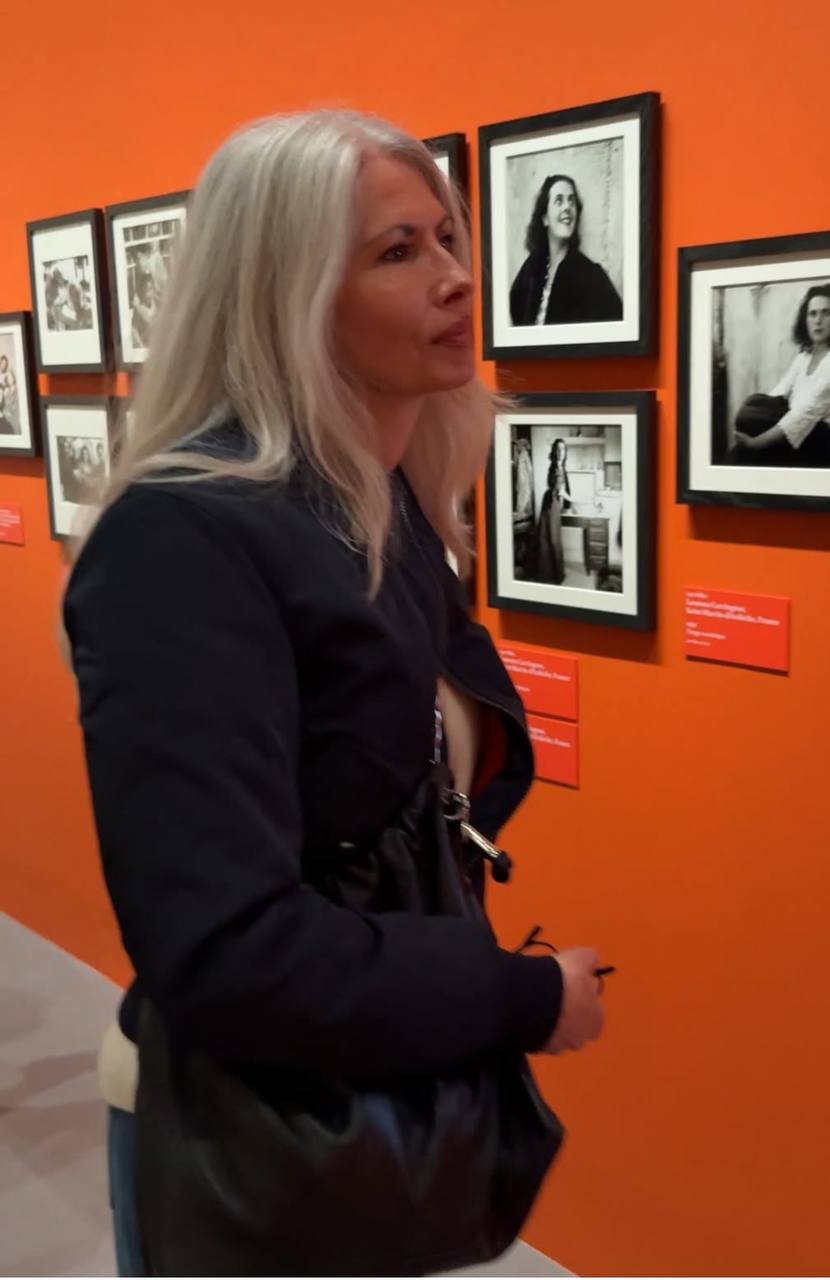
What she is after
Priscilla says she is trying to make a painting that behaves like a stone in your pocket: quiet, cool, specific, worth turning over. Nothing dramatic. Nothing that shouts across a room. Something that is still interesting on the four hundredth morning you walk past it — which, given how she counts time, is roughly a year.